
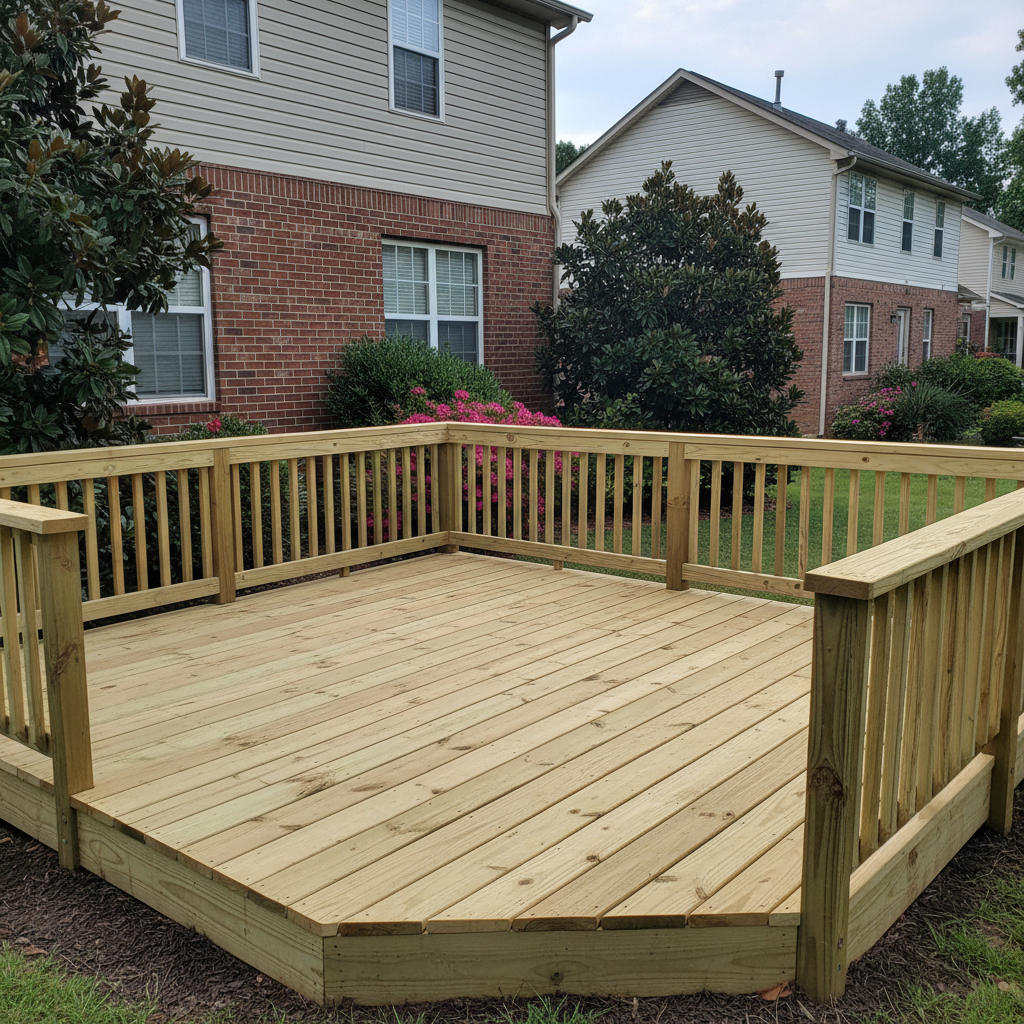
Homeowners usually ask about timing because of comfort, their own or the crew's. That matters less than you'd think. What actually decides when deck work should happen around here is what's going on underground and in the air, and in Jackson both of those swing hard depending on the month.
The short answer is late March through May, and again October into November. The longer answer explains why, and it's worth knowing even if you end up building in July because that's when you have the money and the time off.
What the clay is doing under your yard
Most of Hinds, Rankin, and Madison County sits on Yazoo clay, the same expansive clay that cracks foundations all over this part of the state. It swells when it's wet and shrinks when it dries out, sometimes by inches over a season. For a deck, that means footings have to go down below the zone where the clay is actively moving, usually 24 to 36 inches, sometimes deeper on a bad lot, and sometimes with a bell-shaped bottom or a helical pier if the soil report says the clay runs deep.
Digging in that clay changes completely with moisture. Hit it in August after six weeks with no rain and it's close to concrete, an auger just bounces off it and you're breaking it up with a pick before you can get a post hole started. Hit it in April after a few days of rain and it's soft enough to dig clean, but a hole left open too long after a soaking rain will slump in on itself and fill with groundwater before you can get the footing poured. The sweet spot is a few days after rain, not during a drought and not during a downpour, and Jackson's spring and fall weather tend to land in that range more often than summer or deep winter do.
The weather window that actually works
Summer here means June through August with heat index regularly over 100 and an almost daily afternoon thunderstorm by 3 or 4 o'clock. That's workable, but it compresses every day into a morning, and a concrete footing poured at 9 a.m. can be sitting under an inch of runoff by 4 p.m. if the site isn't graded to shed water fast.
Winter is milder here than people expect, but it isn't nothing. December through February brings a handful of nights below freezing and, most years, at least one ice event. Concrete needs to stay above 40°F for about 48 hours while it sets up, or the cure is compromised and the footing never reaches its design strength. That means blankets over fresh pours or waiting out a cold snap, which adds days you didn't plan for.
Spring, March through May, usually gives the best combination of workable ground and mild air, 60s and 70s for weeks at a stretch. The one thing it brings that nobody mentions until it's in your lungs is pine pollen, which coats everything in yellow by April and sticks to anything with a tacky finish, which is a problem if you're staining at the same time.
Fall, September into November, starts wet because Gulf storm remnants track up through Mississippi in early fall and can dump several inches of rain in a day. By late October the air dries out, the bugs thin, and you get six to eight weeks of about the best working weather Jackson has all year.
Why staining and sealing run on their own calendar
New pressure-treated lumber comes out of the mill soaked, and it needs to dry down to around 15 to 19 percent moisture content before stain or sealer will actually bond instead of sitting on the surface and peeling in a year. In a Jackson summer, with humidity sitting in the 70s and 80s most afternoons, that drying stretch can run two or three months longer than the same board would take in a dry fall. A lot of decks built in June get stained too early because the homeowner is anxious to see it finished, and that's the single most common reason a new deck looks tired by its second summer.
Late fall is the better stretch for staining existing decking too. Lower humidity means the product cures the way it's supposed to instead of staying tacky, and cooler surface temperatures mean it doesn't flash-dry before it has a chance to soak in, which is a real issue on a west-facing deck in July sun.
Permits, inspections, and the paperwork calendar
Most deck work attached to the house needs a building permit, whether the city of Jackson or the county office handles it depending on where the lot sits. Inspectors are generally checking two things above everything else: footing depth before the concrete goes in, and how the ledger board is attached to the house framing, since a ledger that pulls away from the rim joist is the most common way a deck actually fails. Spring is the busy season for permits and inspections around here, which means scheduling an inspector can take longer in April than it does in January. If you're in one of the newer subdivisions out in Madison, Brandon, or Clinton, there's a decent chance an HOA review sits on top of the county permit, which adds its own timeline, something worth checking before you set a start date in your head.
Picking your actual start date
If you're building new, late March through May gives you workable clay, moderate temperatures for curing concrete, and enough runway before summer storms to get the structure closed in. If the project is mostly cosmetic, staining, sealing, replacing a few boards, October and November usually beat the spring because the humidity's lower and the wood dries faster between coats. Composite decking sidesteps a lot of this since there's no stain cure and no moisture content to chase, but even composite boards expand and contract with heat, so fastening it on a 98-degree July afternoon versus a cool October morning changes how tight those gaps should be left.
None of this means summer or winter builds don't happen, they do, and plenty of them hold up fine. It just means the schedule should account for the clay and the humidity, not just whoever has an opening on their calendar. If you want to talk through timing for your specific lot, soil, and sun exposure before you commit to a date, that's the kind of thing worth a site visit rather than a guess, and it's the sort of planning we walk through on every job at Vantor Deck Company.