
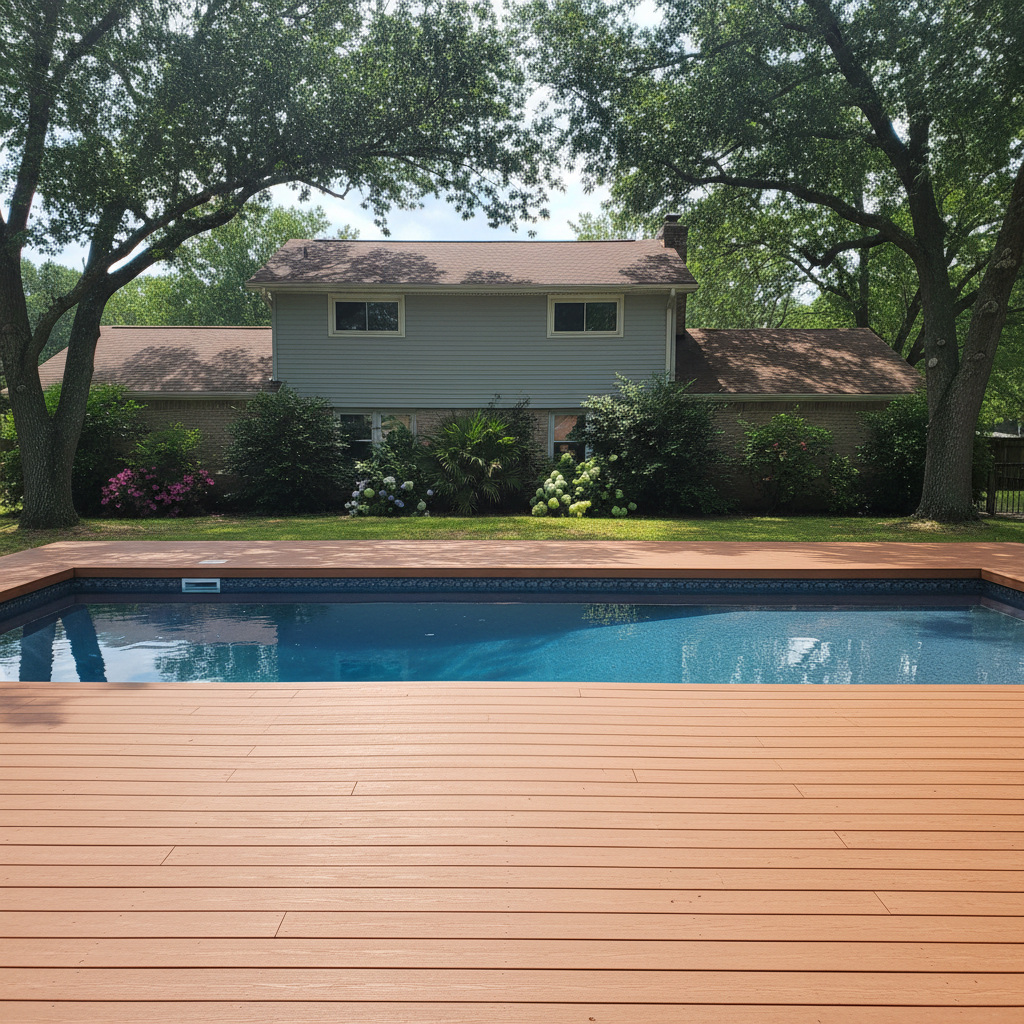
Anybody with a truck and a circular saw can call themselves a deck builder. Jackson has plenty of them, especially after a storm or two generates a backlog of repair work. The difference between a guy who builds decks on the weekends and a builder who's actually going to hand you something structurally sound shows up in about five questions. Ask them before you sign anything.
Ask what's happening below the deck, not just on top of it
Ask what's happening below the deck, not just on top of it
Jackson sits on a lot of red clay, and that clay swells when it's wet and shrinks hard when it dries out in August. A footing that isn't deep enough, or that's just sitting on compacted fill instead of undisturbed soil, will heave and settle unevenly over a few seasons. That shows up as a deck that's suddenly out of level, railings that rack, or a ledger board pulling away from the house. A builder who knows what they're doing will dig footings to the depth your local code requires and set them on solid ground, not on whatever's easiest to dig through that day. For a typical residential deck that often means 12-inch diameter concrete footings set below the frost depth, which in central Mississippi isn't deep by northern standards, but it still has to be done right or the clay will move it.
It also matters what your house is sitting on. A lot of homes in Belhaven, Fondren, and Woodland Hills are older pier-and-beam construction, and tying a new deck into that framing is a different job than bolting a ledger into a slab-on-grade house out in a newer Madison or Flowood subdivision. If a builder doesn't ask what your foundation type is before quoting the job, that's worth noticing.
Find out who is actually pulling the permit
Decks attached to the house, and most decks over about 30 inches off grade, need a building permit in Jackson and in the surrounding counties. That usually means a footing inspection before you pour, and a final inspection that checks railing height and guardrail spacing before you're signed off. If you're in a Rankin or Madison County subdivision, there's a decent chance an HOA is involved too, with its own setback or material rules on top of the county's. Older Jackson neighborhoods mostly don't have that extra layer, but the permit still applies.
A contractor who tells you permits are optional for a deck, or that it's faster to just skip it, is asking you to take on the risk. An unpermitted deck can become a real problem later, when you go to sell the house and the buyer's inspector flags it, or when an insurance claim gets denied because the structure was never inspected. Ask who pulls the permit, homeowner or contractor, and get that in writing.
Look at the lumber and the hardware, not just the price
Pressure-treated southern yellow pine is the standard for the structural frame here, joists and beams, and it holds up fine as long as the hardware around it is right. The spot that fails first is almost always the ledger board, where the deck bolts into the house. It needs proper flashing to keep water from running down behind it and into the house framing. Jackson's humidity from May through September is hard on wood that doesn't have that protection, and rot can set in within a couple of seasons if water's been sitting there unseen.
Joist hangers should be galvanized or stainless, not whatever's cheapest, and joists are typically spaced 16 inches on center for a standard deck board. Guardrails need to be at least 36 inches high by code if the deck is more than 30 inches above grade. None of this is exotic knowledge, it's basic deck-building code, but it's worth asking a builder to walk you through their lumber and fastener choices before you commit. If they can't answer specifically, that tells you something.
Red flags that should make you walk away
- A quote that's only ever spoken out loud, never written down with lumber sizes, species, and a scope of work attached.
- Asking for full payment before any material shows up on site.
- No mention of a permit, ever, even when you bring it up.
- A bid that's thousands below every other quote you got. That gap usually comes from shallower footings, wider joist spacing, or untreated lumber where it shouldn't be.
- Vague or evasive answers about license and insurance, or no proof offered when you ask.
What a decent quote actually looks like
A builder worth hiring comes out, looks at your soil and your existing foundation, measures, and gives you a written scope with lumber species and sizes spelled out, not just square footage and a total. They'll talk about timeline honestly too. Jackson's wettest stretches tend to be late winter into spring, and again in late summer and fall when tropical systems push rain through, and a good crew plans around that instead of pouring footings into standing water. A straight answer about a two or three week delay because of rain is a better sign than a builder who promises a start date no matter what the ground looks like.
None of this is complicated, but it takes somebody actually asking the right questions before money changes hands. We build and repair decks around Jackson and the surrounding towns, and we're happy to walk through soil conditions, permit requirements, or lumber choices with you before you sign with anyone. Vantor Deck Company is built around getting that part right the first time.